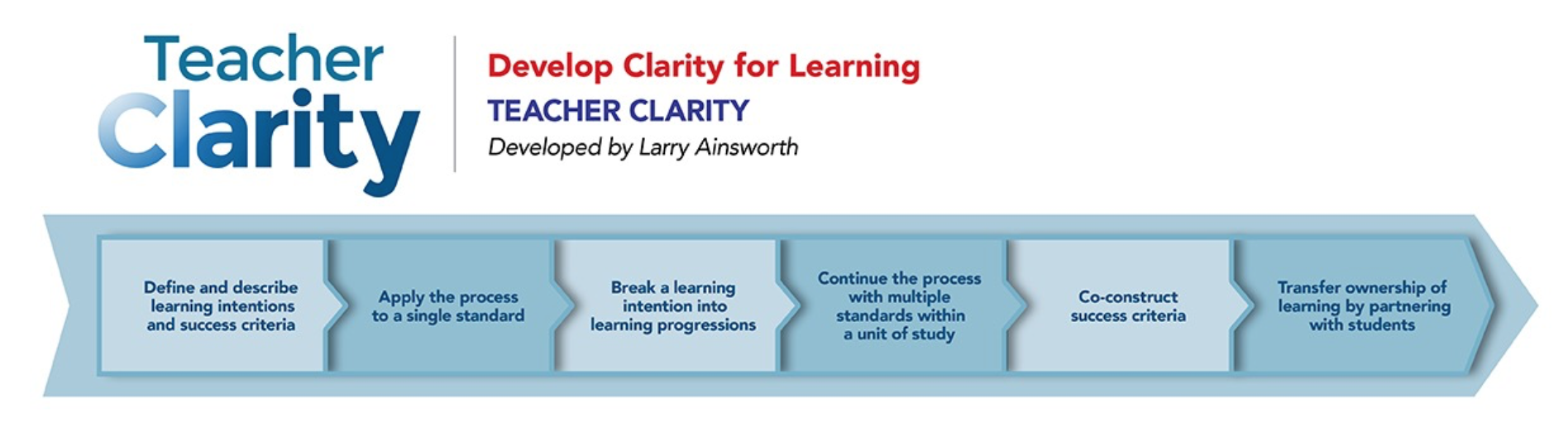
If we want professional development to be successful, teachers have to be supported.
The world of education is one that is always changing. Those of us involved are constantly looking for ways to improve what we are doing in the classroom to make an impact on students. We hear so much about professional development and how necessary it is to make change. Many teachers understand the importance of taking part in professional development, yet it always seems to hold a highly negative connotation. Nihal Yurtseven (2017) looks at this in a different light in his article “The Investigation of Teacher’s Metaphoric Perceptions about Professional Development.” He argued “Although many research findings support the fact that professional development is critical for teachers, the important thing is how teachers perceive this fact with their own perspectives… at this point, teachers’ perceptions about professional development can make important contributions to the identification of the concept of teachers’ professional development as well as resolving potential problems” (124). I would like to take this view and look at local professional development, specifically surrounding the professional development that my region of Northeastern Colorado is taking on. As a group, we can be looked at as educators looking to create change through professional development. There are certain qualities that define how we communicate and how we behave. This Discourse Community of educators can provide other areas looking at professional development with insight into how to communicate effectively when approaching professional development to make it more successful for our schools.
Teacher’s Perceptions of Professional Development
Nihal Yurtseven (2017) conducted his study on teacher perceptions of professional development in Turkey, however, I believe it shows a great deal about the perspectives of educators. This is by no means meant to be a comprehensive view of teacher’s perceptions of professional development, but rather shows general understandings that are necessary to approaching teachers as a Discourse Community. Yurtseven (2017) grouped his findings on teacher perceptions of professional development into different groups. These include seeing professional development as constantly needing to be updated or changed, seeing it as labor intensive, seeing it as a necessary part of what teachers do, and some even found it to be negative in nature. Through these various categories, many similarities came forward. The most important is that teachers understand that professional development is needed, however, they must receive support for it to be effective. Yurtseven (2017) stated that “ it is possible that they [teachers] will feel burnout…Therefore, it is very important for teachers to receive the necessary support in their professional development processes, which they perceive as important as breathing or water and need to continue the learning process as a teacher” (127). This includes giving them resources and time to be able to complete what they are being asked to do.
Clearly, teacher perspectives on professional development must be understood and taken into consideration if their needs are to be met and for professional development to be successful. Thus, I wanted to look at our specific discourse community and how we are communicating these various perceptions and needs to see where we can improve in order to make it effective.
Background on Teacher Clarity for PD
For the past year, Northeast Colorado schools have been working towards teacher clarity and visible learning. This is based on the research conducted by John Hattie. Hattie (2018) held a meta-analysis on various methods employed by teachers and how that affects student learning, whether positive or negative. He averaged the scores out to find that the ‘effect size’ of these separate methods, with anything scored at .40 being the average effect size. This average score equates to the regular levels of learning within students. However, we can hit levels of learning that are much higher than this. Teacher clarity sits at a .75 effect size, and thus has been shown in studies conducted by Hattie to be able to double the rate of learning for students. Furthermore, effective teacher efficacy, or teachers working towards the same goals, has an effect size of 1.57. This leads to exponential rates of learning.
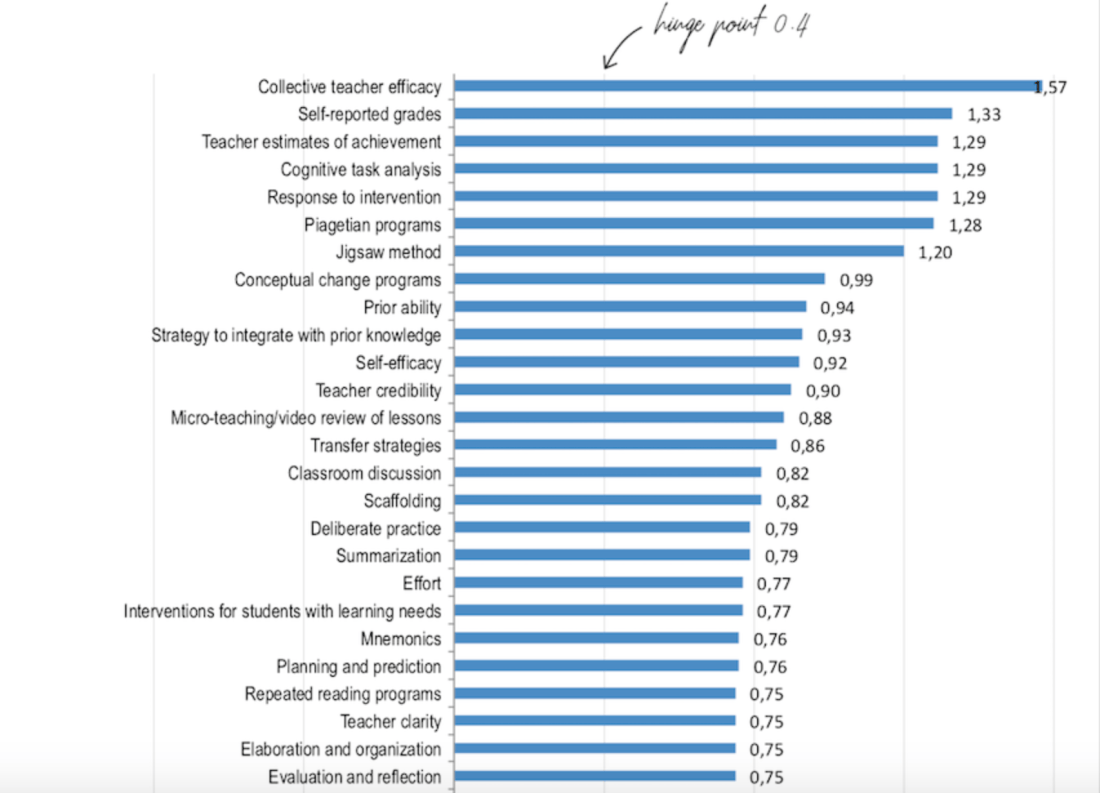
Photo: John Hattie’s Effect Sizes
These two movements are all about helping teachers and students to be able to articulate what they are learning, why they are learning it, and how the students can show what they are learning. Teachers must take state standards and turn them into learning outcomes that are in student friendly language. This allows students to clearly see what they are expected to learn. From this, teachers then construct success criteria, or what students must be able to do to show they have mastered the learning outcome. This allows students to take on responsibility of the learning process. By students being able to see this integrated across the board in a school, it increases learning in all areas. Clearly, these movements that our schools are working towards are necessary and important due to the impact it can have on student learning. This focus helps to piece the educators that are a part of this movement together as a specific Discourse Community. It creates meaning for our districts as we work to make improvements.
Discourse communities and Professional Development
Discourse communities should be defined and how this is related to professional development based on the movement towards teacher clarity and efficacy, as this certainly shapes teacher perception on professional development and how effectively we can work. Some may see discourse as dealing specifically with language. While language is certainly connected to this, James Gee (1999) looks at Discourse Communities as a specific way of “thinking, valuing, acting, and interacting, in the ‘right’ places and at the ‘right’ times” (17). It is about much more than language. It helps us to establish or recognize socially situated identities, or identities that allows that person to do something specific that creates specific meanings our understandings. Gee (1999) also includes the existence of “grammar two,” which is different from the traditional grammar we learn in schools. Different discourses have different shared understandings as a part of their grammar two that helps to create meaning. Though there may be different meanings for the language, the grammar two that Gee (1999) looks at allows for members of a Discourse Community to give specific meaning in order to communicate.
As a part of our Discourse Community of teachers attempting to create change, there are certainly clear attributes of our community that allows us to be recognized. We are all educators, even if we hold different positions within the field, most of us value making improvements for our students. This identity puts us in the right position to enact what we learn in professional development. We all share the same meaning, or grammar two, on how we approach teacher clarity through the meaning of learning outcomes and success criteria.
However, we do have different perspectives within our discourse community about how to approach the work towards teacher clarity, which is where our effectiveness can struggle. Gee (1999) pointed out that there are also “Conversations,” or the interplay of different discourses, which can at times seem to be a debate. This is prevalent within our Discourse community. For instance, some teachers, not because they are lazy or do not care about student learning, see the push for teacher clarity as overwhelming, resulting in conversations about how to enact this properly when there is already so much asked of them. Furthermore, different schools or even teachers may enact these concepts differently depending upon their discourses. This brings in an important argument crafted by James Porter (1986) on the intertextuality of communication. Porter (1986) argues that all texts contain “traces” of allusions or references to other works crafted in that discourse. That is a part of what makes communication effective in discourses, as these connections help to make it meaningful. These conversations of time, of the autonomy of teachers, and more show legitimate concerns within the Discourse of teachers working to create change, something that must be dealt with if our Discourse community is going to work as effectively as it can.
What We Do Well, and What We Can Work On
It is imperative that we understand this community we are a part of. Not only the teachers that are in the “trenches” putting in the hard work to make a change for their students, but also the administrators who are doing their best to help their teachers use these strategies effectively, and for the other leaders instructing our schools in the best way to approach integrating change. We need to look at what we do well, and what we need to work on in the future for this to occur. I believe that we share the same language and goals; this has been presented quite clearly within our community. However, there are areas that need work.
A major finding of teacher perceptions that have been communicated in our Discourse Community is that teachers must be given the time to do this properly. One area of question that so many teachers have is how to do this for all their classes when they have seven periods to prepare for. Leaders of our professional development have made clear time and time again teachers must have time to do this, they cannot be expected to have it done in a couple months. However, it has to go beyond just being a part of our language in our Discourse, but must become a part of what we do. Thus, administration that set deadlines must take this into consideration in order for it to be effective. Though I know many administrators are working towards this, all need to be on the same page within our Discourse.
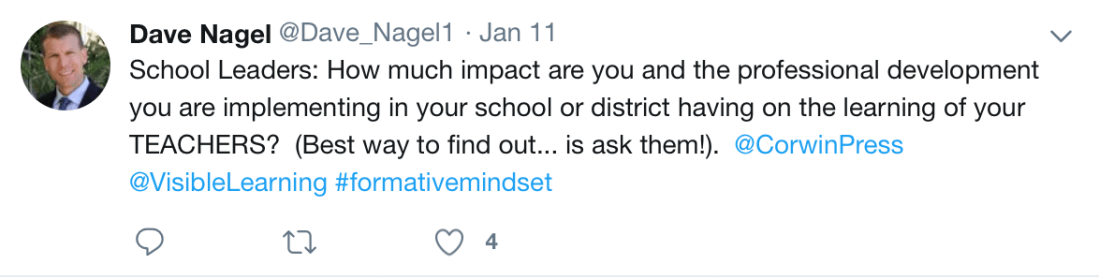
Photo: Professional Development Leader Dave Nagel shows the importance communication.
Furthermore, there are clearly variations in views in our Discourse Community. As discussed above, different schools have different approaches. We should not desire to get from teacher and school autonomy, but work together to ensure that all schools and teachers feel that they are able to have their concerns voiced in the community to address issues they see. This will help all teachers feel more supported in this process, something Yurtseven (2017) stated was necessary for professional development to hit its potential. It will also allow our Discourse Community to be more successful if this support allows teachers and schools to feel more comfortable enacting the goals we have set forward.
I am very proud and excited about the work we are doing within our region. We are working towards something that is so beneficial. It does not mean that the process is perfect, but rather allows us to see ways to improve.
All schools, all regions, and all teachers should take a look at their professional development. What are you doing well, what needs work? What are your perceptions of your teachers? Do you share the same language and same goals? If you don’t, how can you get there?
We all have what it takes to create meaningful, effective professional development that can make a difference for our students.
Sources:
Yurtseven, N. (2017). “The Investigation of Teacher’s Metaphoric Perceptions about Professional Development.” Journal of Education and Learning, 6 (2), 120-131.
Gee, J. P. (1999). “Discourses and Social Languages.” In Introduction to Discourse Analysis: Theory and Method. London: Routledge.
Porter, J. E. (1986): “Intertextuality and the Discourse Community.” Rhetoric Reviews, 5, 34-47.
Corwin. (2019). What is Teacher Clarity? Retrieved from https://us.corwin.com/en-us/nam/what-is-teacher-clarity
Visible Learning. (2019). “Hattie Ranking: 252 Influences And Effect Sizes Related To Student Achievement. Retrieved from https://visible-learning.org/hattie-ranking-influences-effect-sizes-learning-achievement/


Hi Keeya,
I just have to say, I really enjoyed your blog post. Before reading, I scanned your post and I immediately noticed your use of images and graphs. After reading, I see how well they fit in with your work overall. I knew who your discourse community was and the audience you were speaking to. In addition, you had a great, flowing layout that transitioned well.
I completely agree with you that teachers have to be supported for professional development in order to be successful. I often hear complaints about teachers and student test scores. I also often hear teachers complaining about not being able to do their respected jobs successfully because the lack of supplies, support, or funding for their goals. Changes need to be made for the future of society.
Keep up the great work!
Jessilyn
LikeLike
Hi, Keeya,
I enjoyed reading your blog about teacher development. It is nice that they are working hard in your region. I liked how your graphics represented what you were talking about. At the beginning of your blog, you specifically state you are going to talk about Northeastern Colorado, but the next paragraph refers to Turkey. That was probably the best article that you could find that related to your topic, but perhaps it could be tied in using an anecdote or something that related directly to Northeastern Colorado.
I liked your use of statistics. I think that is a great way to answer questions about the validity of your claims. However, I was a little lost. I wondered what the numbers meant. I think the numbers need to have a definition. What were the maximum and minimum numbers possible? Was a high score good?
Thank you for post!
LikeLike
Hi Keeya, I think the way you have incorporated our topic on DC’s this week into your existing DC as a teacher is doubly effective. Your use of sources and images with graphs and Twitter posts from professional developers indicates how the information you provided is well-researched, credible, and informative. I also like your conclusion and ask the rhetorical questions to your community of teachers and how they can help themselves be more effective. My only suggestion is to break up your first paragraph right before “I’d like to take this view…” That way, after your introductory paragraph, it sets the reader up for where the rest of the subject matter is going. You have a clear voice and a clear audience. Great stuff!
LikeLike
Hi Keeya,
It sounds like you are very passionate about your topic, which is wonderful.
I have a few suggestions to, perhaps, help tighten up your content a bit. First, your title definitely did a great job of setting the tone for what I thought was going to be a discussion about discourse communities supporting professional development in teachers. However, I’m wondering if you need the “Background on Teacher Clarity for PD“ section? That seemed to veer off course a bit, and I would consider revising or removing it. Did you find any blogs or sites related to teacher development that was directed toward teachers? Written either by teachers or professional development agencies that focus on teacher development? Could you use those to showcase successful and unsuccessful discourse within the teacher community? Perhaps there’s a third-party PD company that doesn’t quite understand teachers or its place within the teaching community? Also, perhaps you could provide examples from personal experience that you’ve had with professional development and what type of discourse you found successful or unsuccessful? Have you worked with people who really knew their stuff and how to speak to teachers? Or others who did not know how to speak to teachers?
Best of luck with any revisions!
~Linda
LikeLike
Hi Keeya,
While the logos and the infographic at the start of your blog post are visually appealing, I had a few small issues: one, the name of the person who developed Teacher Clarity appears but yours does not; and two, the infographic is too small for me to read without zooming (admittedly, my eyesight isn’t great, others may not have this issue). As these items at at the top of the post, I gather they are significant before even reading, but I wonder if embedding them a little lower down into the text might be better, to give your introductory words more weight.
Is the discourse community of NE CO teachers formalized into a single group in some way? How do you meet, or communicate with one another? You do a great job sharing what you are working towards and this is very important, but understanding the underlying basics may help a reader new to the idea of discourse communities understand how they can vary, and what shape this particular one takes.
Thank you for an interesting read 🙂
LikeLike
Hi Keeya,
Thanks for your thoughts on the value of and challenges surrounding the world of Professional Development. I think that you have a lot of really insightful ideas here, many of which I relate to and which I expect most teachers would resonate with. Unfortunately, most teachers already feel overworked and like they have limited bandwidth, so when PD is presented as another ball to juggle, it can put a bitter taste into one’s mouth. It seems to me that the most successful PD opportunities are those that can honestly be presented as opportunities to lighten the teacher’s load or to encourage and refuel them. I know that I often find myself “tuning out” during PD sessions that suggest that I totally redesign my curriculum, but when I can be inspired by another teacher’s passion or informed by their “tricks of the trade,” I know that there is more that I will be paying attention to. In parts of your blog, you do a good job of engaging with your audience, but I would encourage you to do so right from the get-go. If you could lead in with a story or a relatable anecdote I think that would really win over your audience, and show us (as you later do) that you really are on our side in what can often be perceived as a civil war within the educational sphere. I am eager to see how you develop this thread for next time, as it seems like you’ve really hit a rich vein for further investigation. Thanks again for your thoughts and insights!
LikeLike
Hi Keeya!
I liked the graphics that you chose to support the overall points of your post and to break up the text. I thought that the headers you chose helped to steer the readers’ attention to the main points you discussed. I like that you explained the overall topic and then connected it to your personal environment and discourse community. In your second section about teachers’ perceptions of personal development you highlighted the necessity of teachers being given support and resources to conduct such development, which I thought was an excellent point. Perhaps you can elaborate by providing specific examples of what you think is required. In your section about discourse communities and professional development you did an excellent job of explaining how teachers might have a negative view of the initiative for teacher clarity and you also explained the origins of this view. I did note at the end of your post you mentioned the need for time and clear deadlines as well as a change in culture to give teachers better direction and incentive to accomplish professional development. Overall, this post was very well written and motivating! Great job!
LikeLike
Hi Keeya,
First I want to say I like the incorporated images in this blog entry. From the graphics to the Tweets, they not only support your argument but they also move the post along nicely helping transition from one section to the next. I realize that you are writing for a discourse community I am not currently a part of, but speaking as someone outside of the community, I would find it really helpful feel more of “you” in the post. One thing I like in blogs (or in any writing really, is the ability to get a feel for who it is that I’m listening to. Don’t be afraid to let your academic voice relax a little, I think it would be nice to have a slightly less academic feel and a more conversational feel to your blog. Again, I could be completely off base here as it may be important to retain that formal autonomous discourse when writing for the education community. Either way, this is a very well researched and supported post and you’ve done a great job.
-Abigail
LikeLike